Custom Padel Courts in Dallas

Build a glass-enclosed padel court that fits Dallas outdoor living, plays fast, and holds up through North Texas heat, storms, and daily use.

Padel is built for social play. The rallies are quick, the learning curve is approachable, and the glass-wall rebound makes the court feel active from the first game. Home Turf Dallas designs and installs padel courts for private homes, clubs, schools, and amenity properties that want a premium sport feature with more energy than a quiet backyard court and more daily usability than a single-purpose showpiece.

A padel court is not just a smaller tennis court with turf. The enclosure, glass panels, steel frame, synthetic turf, lighting, drainage, and access clearances all have to work together. In Dallas, that coordination matters because summer heat, spring storms, and clay-heavy subgrades can punish weak base work or poorly planned drainage. We design the whole court system around the site so the play surface stays consistent and the enclosure feels integrated instead of bolted on as an afterthought.

We build for clients across Park Cities, Preston Hollow, Lakewood, Plano, Frisco, and the wider North Texas market. Some projects are private residential courts for families that want a standout amenity. Others are multi-court club or community installations where scheduling, lighting, and maintenance access matter as much as the surface itself. In each case, our process starts with layout, orientation, and structural planning before we finalize turf, glass, and accessory details.

The finished court should feel sharp, reliable, and natural to use. That means clean entries, safe perimeter movement, correctly placed lighting, a surface that gives players confidence, and rebound walls that support the rhythm of the game. When those details are handled correctly, a padel court becomes one of the most active spaces on the property.

Looking for a broader overview? Explore our Residential, Commercial, and Putting Green pages for more information.

Designing Padel Around Dallas Outdoor Living

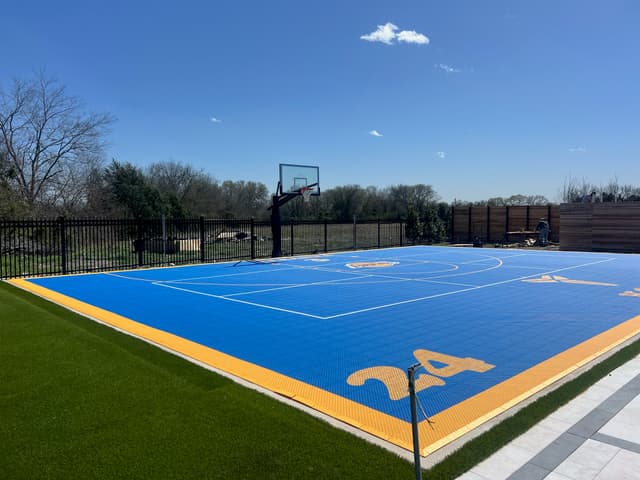
A padel court often becomes the most visible recreation feature on a property, so placement matters. We look at how the court relates to patios, pools, turf areas, fencing, and existing landscape structure before locking in the orientation. The goal is to create a court that is easy to access, easy to watch, and visually aligned with the rest of the outdoor space. On private Dallas properties, that can be the difference between a court that feels like a luxury amenity and one that feels awkwardly inserted into the yard.

We also plan the surrounding space for real use. Players need room to enter, guests need somewhere to stand or sit, and maintenance crews need access without crossing delicate landscape features. Those practical details shape gate placement, path connections, lighting positions, and edge treatments. A padel court that works well outside the lines will get used more often inside the lines.

  • Court orientation based on sun and site flow
  • Integrated access from patios and turf areas
  • Viewing and seating zones planned early
  • Lighting considered before construction
  • Gate placement matched to daily use
  • Landscape transitions kept clean and durable
Base, Drainage, and Enclosure Details That Matter

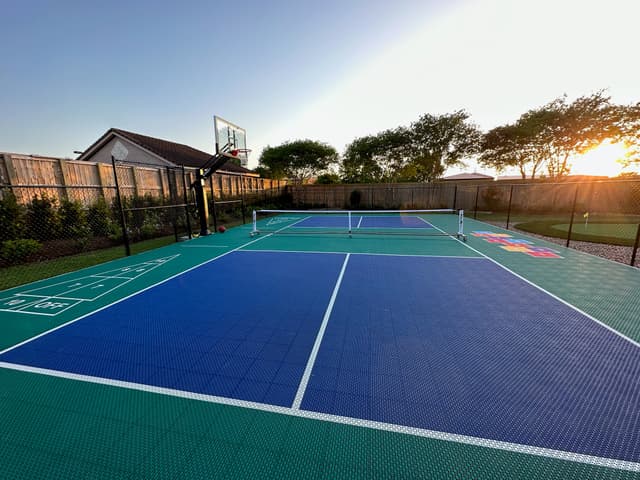
The padel enclosure adds structural demands that do not exist on open court builds. Glass panels, framing, gates, and mesh sections all need a stable foundation and clean alignment. If the base shifts or the court edge is underbuilt, enclosure details can lose precision over time. In Dallas, that risk is higher because expansive soils and heavy rain cycles can create movement when a site is not properly prepared.

Our construction approach starts below the visible surface. We manage excavation, compaction, slope, and edge support so the turf and enclosure have a reliable platform. Drainage is planned to move water without undermining the court perimeter or creating soft spots under high-traffic areas. The result is a court that feels stable, drains correctly, and protects the glass-wall system from avoidable stress.

  • Stable support for glass and frame systems
  • Compacted base for North Texas soil behavior
  • Slope management for storm recovery
  • Edge support around access points
  • Drainage planned before turf goes down
  • Enclosure alignment protected over time

Why Padel Works for Homes, Clubs, and Private Communities

Padel's strength is participation. New players can enjoy the sport quickly, experienced players still get tactical depth, and doubles play creates a social rhythm that fits private properties and shared amenities. For Dallas homeowners, that makes padel a compelling alternative to a court that only one person in the household uses. For clubs and communities, it adds a modern racquet sport with strong programming potential.

The operational side matters too. A padel court needs clear scheduling, simple care routines, and surrounding circulation that keeps play moving smoothly. We plan those details differently for a private residence than we do for a club or HOA. A single-family court may prioritize visual integration and family use, while a shared court may prioritize durability, lighting, and traffic flow. Matching the build to the ownership model is how the court stays active long after installation.

  • Easy entry point for new racquet players
  • Strong fit for doubles and social play
  • Useful for private and shared amenities
  • Programming potential for clubs and HOAs
  • Maintenance expectations set clearly
  • Ownership model guides design decisions

Key Benefits

High-Energy Social Play

Padel creates longer rallies and easier participation than many racquet sports, making it a strong fit for families, clubs, and private communities that want frequent use.

Glass-Wall Court Experience

The enclosure is part of the sport. We coordinate glass, frame, access gates, and viewing angles so the court feels like a true padel environment.

Built for Dallas Weather

Base depth, slope, drainage, and surface selection are planned for North Texas heat, heavy rain, and soil movement instead of mild-weather assumptions.

Premium Residential Amenity

A private padel court adds a distinctive recreation feature that supports daily activity, entertaining, and property differentiation.

Club and Community Ready

Multi-user projects can be planned with lighting, queue space, access control, and maintenance circulation so the court works operationally as well as visually.

Turf Surface Performance

Synthetic turf specifications are selected for traction, ball response, infill behavior, and long-term playability under Dallas usage patterns.

Our Process

1

Site Fit and Orientation Review

We evaluate available footprint, sun angle, drainage flow, access paths, setbacks, and adjacent outdoor living areas to determine how a padel court should sit on the property.

2

Court Layout and Enclosure Planning

The court dimensions, glass-wall system, steel framing, gates, lighting, and spectator zones are coordinated before construction so the finished space feels deliberate.

3

Base Construction and Drainage

We excavate, grade, and compact the base for stability, then manage water movement so the surface recovers quickly after Dallas storms and avoids chronic low spots.

4

Turf, Glass, and Frame Installation

The synthetic turf system, infill, glass panels, frame elements, and accessories are installed with attention to play response, safety, and clean finish details.

5

Playability Check and Owner Walkthrough

We review traction, rebound behavior, drainage, lighting alignment, entry points, and routine care so the court is ready for steady use from the first match.

Applications

Private Dallas Residences

Backyard padel courts for families that want a high-use sport amenity integrated with pools, patios, turf, and outdoor kitchens.

Country Clubs and Racquet Clubs

Padel courts that expand programming, attract new players, and add a modern racquet sport to existing tennis or pickleball facilities.

HOA and Private Communities

Shared courts designed for controlled resident use, evening play, and manageable long-term upkeep.

Schools and Training Facilities

Compact racquet-sport courts for youth instruction, after-school activity, and athletic programming.

Hospitality and Event Properties

A distinctive recreation feature for luxury rentals, resorts, and private event environments that want guests to stay engaged on site.

Why Choose Home Turf Dallas

Complete Court Coordination

We manage padel as a full system, including base work, turf, enclosure, glass, access, and accessory planning.

North Texas Construction Judgment

Our build decisions account for Dallas clay soils, storm volume, UV exposure, and seasonal expansion pressure.

Residential and Commercial Scope

We can plan a single private court or a larger amenity installation with the same attention to performance and finish quality.

Player-Focused Details

Line clarity, surface feel, rebound walls, gate placement, and lighting are selected around the way padel is actually played.

Clear Project Communication

You get a defined scope, material plan, and sequence before work begins, with practical guidance for ownership after installation.

Frequently Asked Questions

How much space does a padel court need in Dallas?
A regulation padel court has a defined playing area, but the total footprint also needs room for enclosure access, drainage, maintenance, lighting, and safe circulation. We measure the usable site and explain what will fit before design is finalized.
Is a padel court different from a pickleball court?
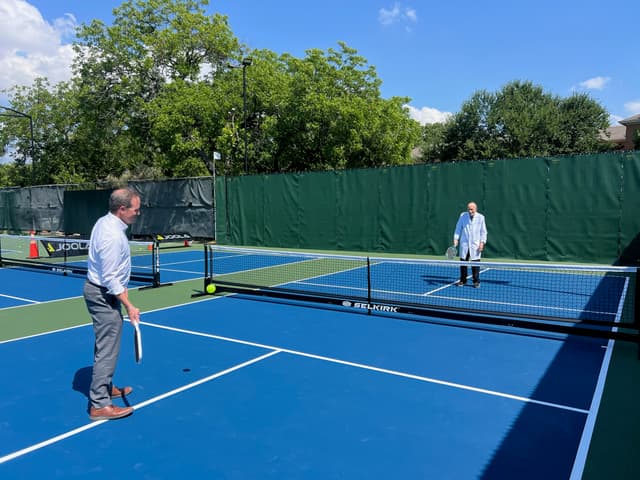
Yes. Padel uses a glass and mesh enclosure that is part of gameplay, along with synthetic turf and different dimensions. It requires more structural coordination than an open pickleball court.
Can a padel court be installed in a residential backyard?
Yes, if the property has enough usable space and the layout can support access, drainage, and enclosure placement. Many Dallas residential projects are designed as premium backyard amenities.
How do you handle drainage under a padel court?
We plan slope, base material, and water movement before installing the turf and enclosure. Drainage is especially important in Dallas because intense storms can expose weak grading quickly.
Can you add lighting for evening play?
Yes. Lighting can be planned during design so fixture placement supports visibility without creating unnecessary spill into nearby outdoor living areas or neighboring properties.
What maintenance does a padel court need?
Routine care includes debris removal, turf grooming, infill checks, glass cleaning, and periodic inspection of gates, frame components, and drainage paths.

Get a Free Quote Today

Ready to transform your Dallas property? Contact Home Turf Dallas for a free on-site consultation and detailed estimate.