Planning a Court Around How Your Players Actually Train
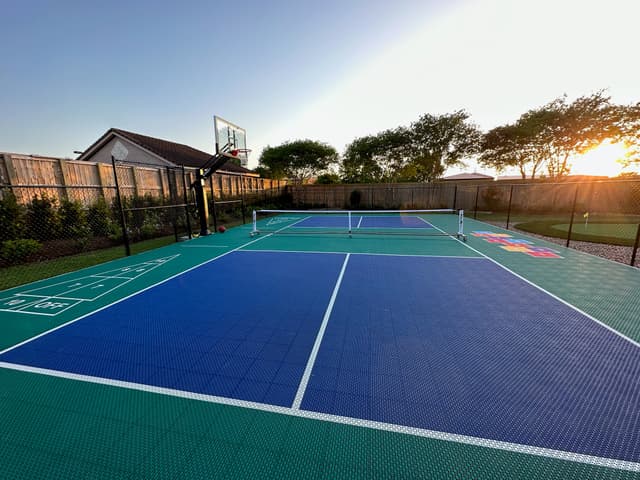
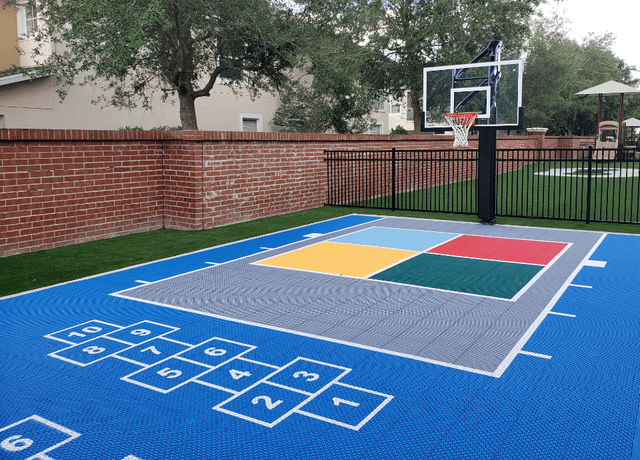
A basketball court should reflect your users, not a generic template. Youth athletes often need repetition space for shooting and ball handling, while adult players may prioritize pickup spacing and safer footwork transitions. We design around those realities. For some Dallas families, that means a focused half-court with optimized hoop location and rebound pathways. For others, it means expanded dimensions for multi-player movement. We evaluate who will play most often, what drills matter, and whether the court should emphasize development, social use, or both. This practical framework prevents overbuilding and ensures every square foot contributes to meaningful use.
We also consider property circulation and neighbor context. In Park Cities and similar neighborhoods, lot geometry and adjacent structures often require careful orientation to manage ball travel, lighting impact, and spectator positioning. A strong design improves game flow while reducing nuisance factors that can shorten court usage over time. We can plan for fencing zones, equipment storage, and seating without creating visual clutter. That level of planning helps your basketball court feel like an integrated part of the home environment rather than an afterthought added to leftover space.
- Player-age and training-goal based sizing
- Hoop placement tuned for repetition quality
- Safety clearances for active movement
- Neighbor-conscious orientation planning
- Integrated storage and viewing zones
- Design logic tied to daily usage